The texts in this blog are published with their original spelling and grammar. No comments and teacher feedback are included.
Showing posts with label Florencia Villaverde. Show all posts

Thursday, November 17, 2011

“Amber” a tool for encouraging teenage reluctant readers

by Florencia Villaverde

Teenagers are often reluctant to read certain kind of stories, especially those which had nothing in common with their own lives. On the other hand, they enjoy reading stories that deal with real life events that are related to their own experiences. Young Adult Literature offers teenagers between the ages of 12 and 20 a wide range of stories that contain several characteristics that make them appealing to teenagers. The content of Young Adult stories usually deal with contemporary issues and the language and plot of these stories are similar to what teenagers are accustomed to find in everyday life. The purpose of this essay is to analyze the story Amber, which is a Texas ghost story excerpted from “Spooky Texas” and retold by S.E. Schlosse, and to compare its features with the ones included in the definition of Young Adult Literature coined by Small, so as to prove that this story does contain all the characteristics mentioned by Small and can be used to attract teenage readers. 

According to Small, there are certain characteristics that are specific to YAL. Some of them are that the main character is a teenager, the events and problems in the plot are related to teenagers, the main character is the center of the plot, dialogues in the story reflect teenage speech, the point of view presents an adolescent´s interpretation of events and people, the teenage main character is usually  perceptive, sensitive, intelligent, mature, and independent, the novel or story is relatively short and the actions and decisions of the main characters are major factors in the outcome of the conflict. 

The story Amber tells the experiences of four teenagers who decide to play with the Ouija board at night. They start playing and make contact with a little girl who asks for help. They try to help her but it is worthwhile. This story can be considered as a case of YAL because it contains all the characteristics listed by Small. 

As regards the characters in the story, we can infer that they are teenagers because the plot of the story deals with the Ouija game which is usually related to teenagers.  Teenagers often feel attracted to this kind of games because they are risky. 

Moreover, the point of view of the story presents an adolescent´s interpretation of events and people as the narrator is a teenager who included herself in the story. 

“Mary waited until midnight to begin our little game, and the four of us—Sarah, Jessie, me, and, Mary, started by asking all kinds of silly questions.”

Besides, the characters are perceptive, mature, independent and sensitive. We can realize this in the following excerpt of the story:

“Call 9-1-1,” Mary cried suddenly. “Quick. Amber is in danger.”

The characters in the story show a mature behavior as they insist in calling the 911 urgently to help the little girl. They also show that they are sensitive as they worry about her. 

What is more, the actions and decisions of the main characters are essential in the outcome of the story as the four teenagers decide to play a dangerous game and do not take into consideration the consequences.

Besides, the story is really short, just a page and a half. It is one of the characteristics pointed by Small as relevant to Young Adult Literature because teenagers prefer reading short stories or novels. 

Taking into account everything, we can say that Amber is a case of YAL since it contains the characteristics listed by Small. These characteristics make Amber a good option to be presented to reluctant teenage readers because they will feel represented in the story and will enjoy reading it. 

Teenagers as readers: What kind of books do they prefer to read?

by Villaverde, Florencia  and Núñez, Melina

Contrary to popular myth, teenagers enjoy reading. However, it is clear that they do not like reading everything they are presented to. We carried out a survey in order to know more about the characteristics that teenagers consider a good book should contain. With the results of the survey, we will explore throughout this paper the differences and similarities between Small`s characterization of a good book for teenagers and teenagers `owns beliefs. The purpose of this is to determine what kinds of books teenagers prefer reading. 

Nowadays, teenagers read a wide variety of books during their lessons at school. It is important for teachers to know about the preferences of teenagers so as to choose books which call their attention and make them feel interested in what they are reading.

Many authors coincide in the importance of including certain elements in books directed to teenagers in order to engage them. Small (1992) is one of them. He points out that the main character of a story should be a teenager, the events and problems in the plot should be related to adolescents and the story should be relatively short. The survey we carried out included items related to the ones Small pointed out. 

Data for this quantitative study was collected from twenty teenage students of sixteen years old, who study English as a foreign language. The students belong to a public school from the district of Moron in the province of Buenos Aires, Argentina. 

The survey was divided into six sections which contained several options. Students had to decide which options were more appropriate according to their preferences. The analysis of the data included analytic deduction. We summed all the students´ answers in order to identify the options chosen by the majority. The following is a sample of the survey:

What characteristics make a good book for teenagers?

Characters                                                                           
- Teenage character
- Adult character
- Adult and teenage character
- Other/ others.
Plot:
- Based on real life events
- Related to science fiction
- Other/ others
Length 
- No more that 150 pages
- Up to 400 pages
- Other/ others.

Characters “are the guide who bring the story world to life and teach us to see the rich potential human beings have for goodness, love, faith, and hope, as well as for fear and evil” (Peterson and Eeds, 1990, p.31). A good selection of characters is essential to encourage teenagers to read not just a chapter but a whole story. Through a good characterization authors can make teenagers feel represented in a story and fulfill their special needs. These needs include the need to belong to a particular group of people, the need to communicate their own desires and fears to adults and the need for entertainment (Gail De Vos, 2003). Taking into account Small`s ideas, the main character in books directed to teenagers should also be a teenager and it makes sense if we take into account the need of teenagers to feel themselves represented in a story. However, after we carried out the survey, we realized that most of the students had chosen “adults and adolescents” as the preferred characters for a good story. Their answers are shown in graphic 1. 

The results were unexpected because we believed that they would only choose adolescents’ characters as the key for a good story. We draw this conclusion taking into account teenagers´interest in movies and television programmes. However, the majority of students has chosen both adolescents and adults´ characters.  We consider that this choice may be related to their wish to be adults and more independent. 

The plot is an important part of any story. According to Baker and Greene (1987) a well-developed plot includes a brief opening that introduces the main characters, sets the scene and anticipates the action. The ending resolves the conflict, releases the tension and leaves the reader feeling satisfied. These characteristics are taken into account by many authors when writing for teenagers. However, Small points out another characteristic that a plot should include. This characteristic is related to the kind of events the plot will be based on. To Small a story directed to teenagers should include a plot based on events and problems that are closely related to teenagers. We considered Small´s idea and included it as an option in the survey. We also added a contrastive option and give students the opportunity  to write other ideas if they do not agree with the ones we stated. Students´ answers are shown in graphic 2. 

Taken into account the results, we could confirm that Small´s characterization of the plot coincides with the students´ choice. The majority of the students agreed in having a plot based on real events as an important factor for a good story. This result can be interpreted through Yolen´s ideas. Yolen (2000) stated that “through stories teenagers are able to try their own dreams, fantasies, fears, and concerns without experiencing real-life consequences”. This means that teenagers identify themselves with plots based on real life situations or experiences and  develop a critical thinking without exposing them to risky situations.

According to Small, stories for adolescents should be relatively short. This means rarely more than 200 pages. We include in the survey three options to confirm or refute Small´s idea about the length of a good story for adolescents. The results are shown in graphic 3.

We realize that  teenagers prefer reading stories of no more than 200 pages. This could represent the lack of motivation some of them have towards literature. However, we also consider that these answers could represent the attention span of adolescents.

Our research demonstrates that the majority of the students who participated in our survey  has chosen the same characteristics that Small presented as  regards the length of a story and the plot. A story should be short and it should be based on real life events. 

Friday, May 13, 2011

A Case of the Stubborn (review)

Robert Blotch
(Review by Florencia Villaverde)

A Case of the Stubborn is a zombie`s story written by the well-known author Robert Blotch. It tells the strange events of a southern family that has to deal with their dead grandfather.

The old man, who suffered a fatal heart attack, refuses to believe that he has died and continues with his life normally, as if nothing has happened. However, it causes great trouble to his relatives so his gransdson decides to adopt severe measures in order to prove him that he has already begun to rot.

It`s a very interesting story with a funny ending. You would really enjoy reading it. Highly recommended.

Monday, April 25, 2011

Life itself (TV show proposal)

Dear Sir,

It would be a pleasure for our company that you may consider our new project called “Life itself” directed to adolescents and based on real life facts.

The project deals with everyday situations that teenagers face in their lives in Argentina. For example: adictions associated to alcohol and drugs, violence,  teenage pregnancy, eating disorders, among others.

The cast was properly selected by our qualified staff of acting professionals. The chosen actors will perform the roles of adolescents that belong from different social contexts.

We consider this serie is appealing to teenage viewers since each episode will show different situations in which they may feel identified and after watching it, they will be able to reflect upon their own experiences.

We expect the tv programme to be broadcasted five days per week, from six pm to seven pm because of the high porcentage of audience at that time. What is more, there will be  special editions supported by proffesionals that will deal with the topics exposed on previous episodes.

We hope you take into account this interesting project and let us be part of your network.

Faithfully

Friday, November 19, 2010

The Doorbell Rang and the promotion of values

by Florencia Villaverde

The Doorbell Rang is a children’s story written by Pat Hutching. It is very popular among children because of its lively, full-colour illustrations that provide young readers with a meaningful visual context to understand the story. It is also a great tool for teachers because it can be used for teaching numbers.

There are many people who consider that the story contains a moral purpose since it promotes the value of friendship. We can realize this throughout the story as the children of the story share the cookies that their mother has prepared for them with their friends. But although The Doorbell Rang has a moral purpose, which is to teach children the importance of sharing with others, it also promotes sexist values.

The mother in the Doorbell Rang is represented in a traditional female role. She is a typical housewife that is always cleaning the floor, cooking and taking care of her children. This stereotypical representation of women is not positive for children at all since it gives them a sexist message: women can not be equal to men.

This promotion of sexist values in the story is not only represented through the role of the mother but also through the role of the absent father.  In this case, he may be absent because he is the only one who works outside. This is also a traditional view of the men’s role in society which is not beneficial neither to girls nor to boys.

All in all, The Doorbell Rang can not be considered part of the stories in which it is shown a positive, respectful attitude towards gender roles. This story is a clear example that although women and men were able to make changes to their traditionally accepted role in society throughout many years, there is still work to be done.

Saturday, October 23, 2010

The Simpsons: a cartoon that deals with important issues

By Núñez, Melina and Villaverde, Florencia


The Simpsons cartoon was created by Matt Groening in the ´80s and made its first appearance on television in 1987. Nowadays, it has become the most popular cartoon around the world. The main characters of this cartoon are the members of The Simpson family: Homer, Marge, Lisa, Bart and Magie who live in a city called Springfield. 

Each member takes a particular role in the family. Homer is the husband/father who does not like working and enjoys drinking beer; Marge is the housewife/mother with an unexcited life; Bart is the rebel of the family; Lisa is the most intelligent of the three children; and Maggie is the baby that does not speak. However, all the characters make use of irony and parody in similar ways, dealing with topics such as religion, politics and racism. According to the Oxford Dictionary,  Irony means “the use of words that say the opposite of what you mean, often as a joke”; and parody means “ a piece a writing, acting or music that copies the style of somebody or something in order to be amusing”. Both irony and parody are not only used by Matt Groening as tools for making people laugh but as a means to convey important aspects of modern society. This is the key for the success of this cartoon. 


Religion is one of the major topics in the cartoon. The creator of The Simpsons uses parody and irony in several occasions when dealing with this topic. Some clear examples are the followings: Homer does not think that religion is important to his life but he believes in God when he is in troubles. He practises the Protestant religion although he believes that going to the church is a waste of time. Many times he confuses God with a character of a comic strip (Superman). 

Although religion is a quite delicate matter, most people do not take Homer behaviors or actions as offences. With the use of irony people take it less seriously and many times laugh at Homer jokes and also discover hidden messages in his phrases. 

As regards politics, corruption goes hand by hand with it for Groening. He shows us that politicians can be corrupt when they have money and power through the character of the Mayor. Groening uses parody to make people aware that the Mayor is like most politicians  and does not care about the citizens´ problems, but only about getting more money. 

Sometimes people find many coincidences between the Mayor in the cartoon and the politicians of real life. People take for granted that corruption appears easily in the field of politics, but instead of feeling angry about it as they would in real life, they laugh at this situation. 

Racism can be seen in many episodes of The Simpsons. Apu, an Indian shop assistant, is sometimes discriminated by the citizens of Springfield, especially by Homer. Groening uses parody when he represents Apu as those immigrants who come to America looking for new opportunities in a way that is humorous.  For example, the episode when the Springfield´citizens discover that Apu is an ilegal immigrant and start discriminating him for this cause. 

The Simpsons success lays on the ability of Groening to make people laugh at situations that appear in this cartoon and are similar to the ones of real life. The use of irony and parody contribute to this success and help Groening developing topics that are important in the modern society.   

Monday, October 11, 2010

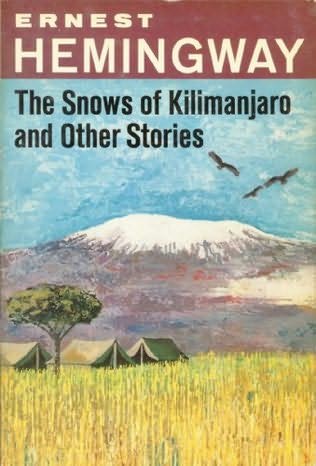
The Snows of Kilimanjaro

Ernest Hemingway
(Review by Florencia Villaverde)

The Snows of Kilimanjaro is a novel by Ernest Hemingway that tells the story of Harry, an American writer, who develops an infection on a safari in Africa. As a consequence of his infection, he has to lie alone in a bed and wait until his death. While the main protagonist is waiting for his death, he remembers his experiences in different places of the world and regrets some of the decisions that he made during his life. In The Snows of Kilimanjaro, the author shows how reflection comes before death and how important is to leave this world without regrets. 

Monday, June 7, 2010

Little Red Ant (by Melina Núñez and Florencia Villaverde)

Once upon a time, there was a family of red Ants who lived in a big tree in the forest. The family was made of: Father Ant, Mother Ant and their daughter, whose name was little Red Ant.

Everyday, they worked hard to get food because winter was coming. They got up very early in the morning and went to bed at midnight.

One day, little Red Ant was looking for food in the forest and suddenly discovered a very little ant, whose name was Rose Ant, sitting on a stone and crying. She asked her what the problem was.

“I can’t find my tree, I am lost,” Rose Ant answered. 

Little Red Ant offered her new friend to stay with her and her family until she found the tree where she lived. Rose accepted and went to little Red Ant’s home.

When they got there, little Red Ant’s father was not happy because they had not enough room for Rose to stay there. Little Red Ant suggested him to give some leaves that were in the living room to their neighbours in order to have more space for the new guest.


“I won’t give the leaves to the neighbours, dear daughter,” said Father Ant really angry.

“What’s wrong with that?” said little Red Ant. “It makes room for new people,” she added. “And you have always taught me to share with other people,” she concluded.

Her father realized that little Red Ant was right and allowed the new guest to stay with them until she found her tree.